NEWSLETTER


The RES meeting is where a support-system decision gets locked in for the next excavation cycle. Engineers, contractors and the owner's representative all in one room with one shared view agreeing on what the ground is doing and what support the ground needs.
What makes a RES meeting productive is alignment on what's actually happening underground.
RES meetings typically start with disjointed notes, sketches, and photos. Questions on where photos were taken and whose interpretations match consume the meeting discussion. The data is subjective and difficult to dicern when you're not underground, adding time pressure and added difficulty to decision making everyday.
Five stages. Two products. One connected workflow from face to decision.
Define what data needs to be ready for the RES meeting such as current ground conditions, previous support records, and GBRs.

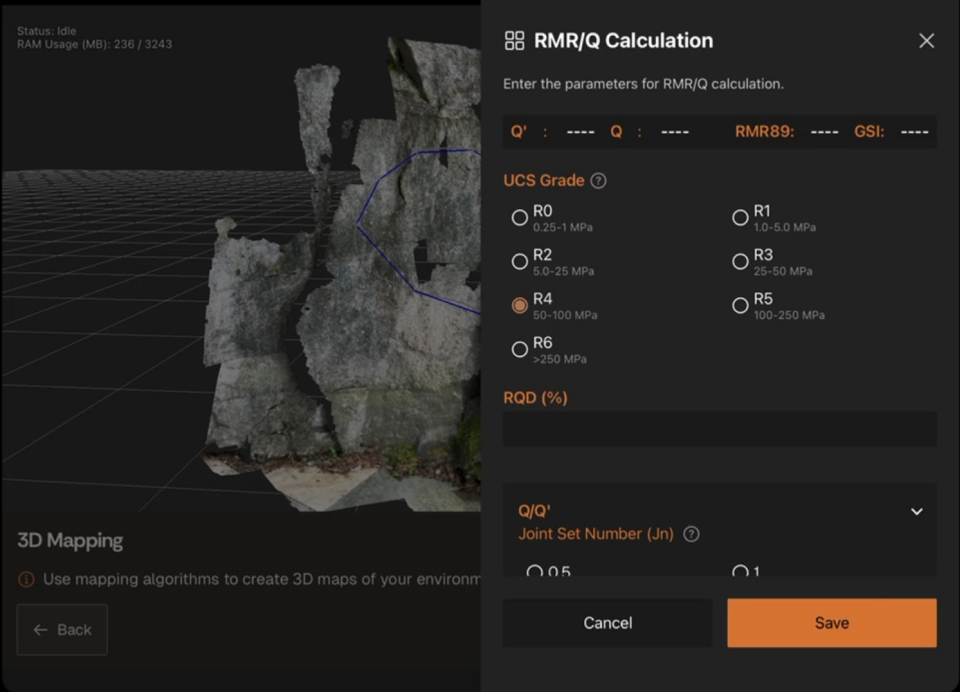
The ground conditions are captured and geotechnical conditions assessed on Lithos, in the day or hours leading up to the review.
Datasets sync to Strata where they are mapped and georeferenced. Data is structured and searchable. Historical data from previous meetings can be surfaced alongside the current record.


Bring the team underground virtually with annotated 3D models shared on screen in Strata. Support-system decisions can be made with everyone looking at the same underground conditions.
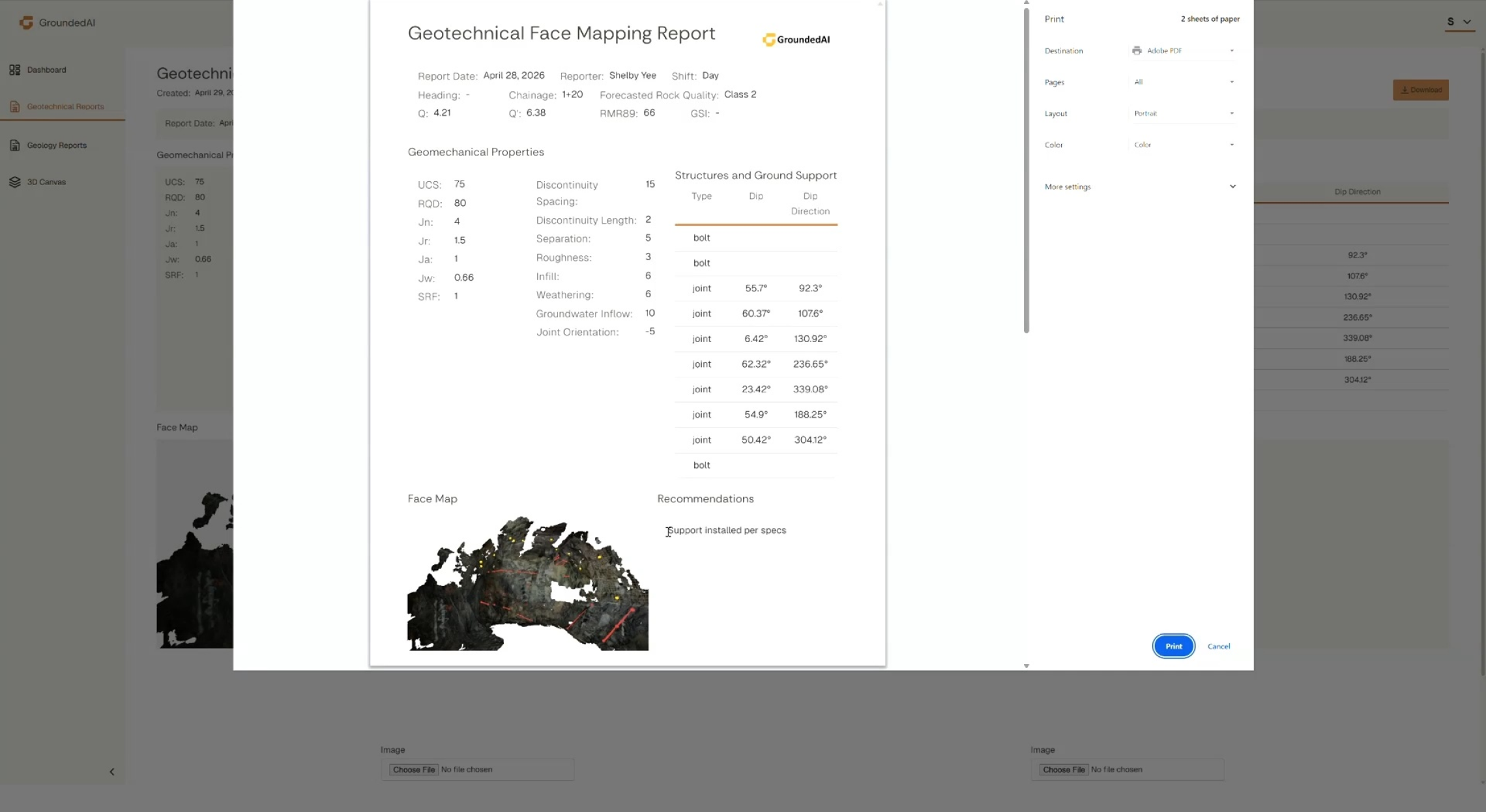
The meeting decision and the evidence it was made on are generated through a report in Strata as part of the project record and easily sharable as a .pdf across parties.

Underground data is captured before the meeting. Current geotechnical conditions are recorded.

Annotated and georeferenced 3D datasets, report generation documenting decisions. The RES review meeting can occur with the Strata screen shared.
A decision record tied to the underground conditions encountered. Support-system decisions based on current ground conditions. A persistent RES meeting history with reports that let future reviews compare this decision to previous ones.

Data captured in Lithos flows directly into the Grounded platform, where teams can review conditions, generate reports, and align on decisions.


Walk through a full RES workflow from underground capture to support decision

© 2026 GroundedAI. All rights reserved.
Vancouver, BC · EN


